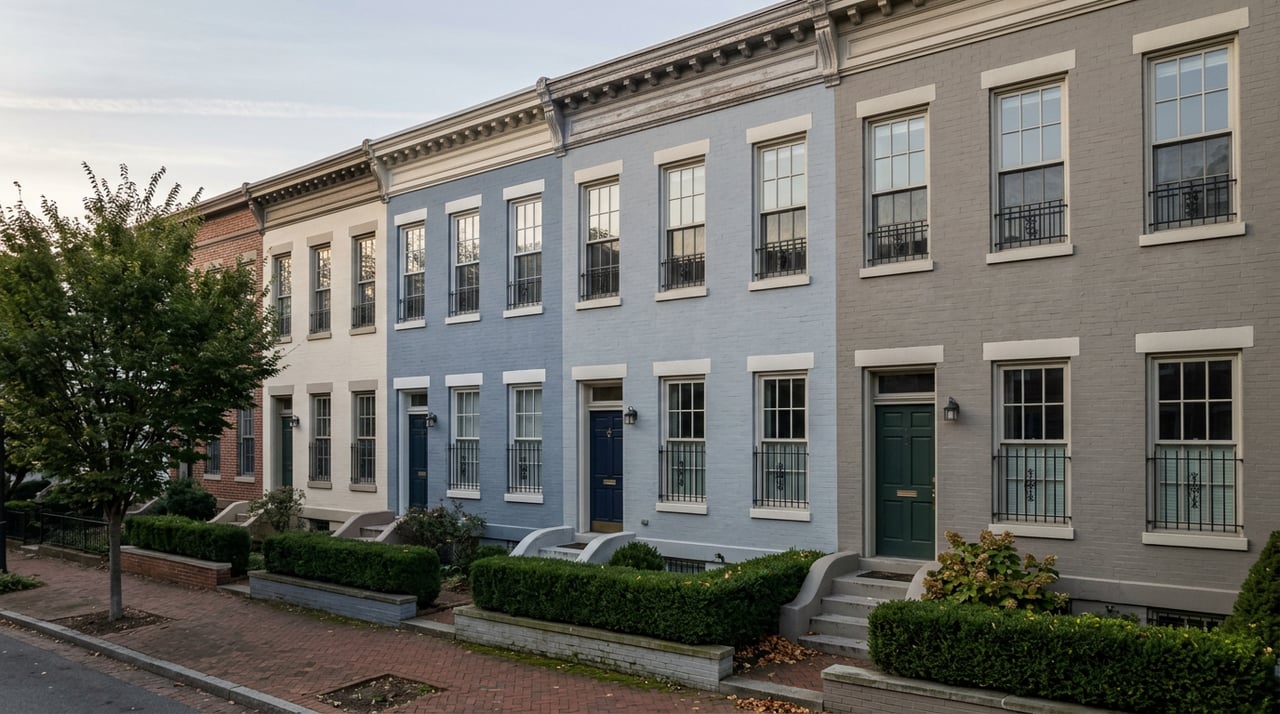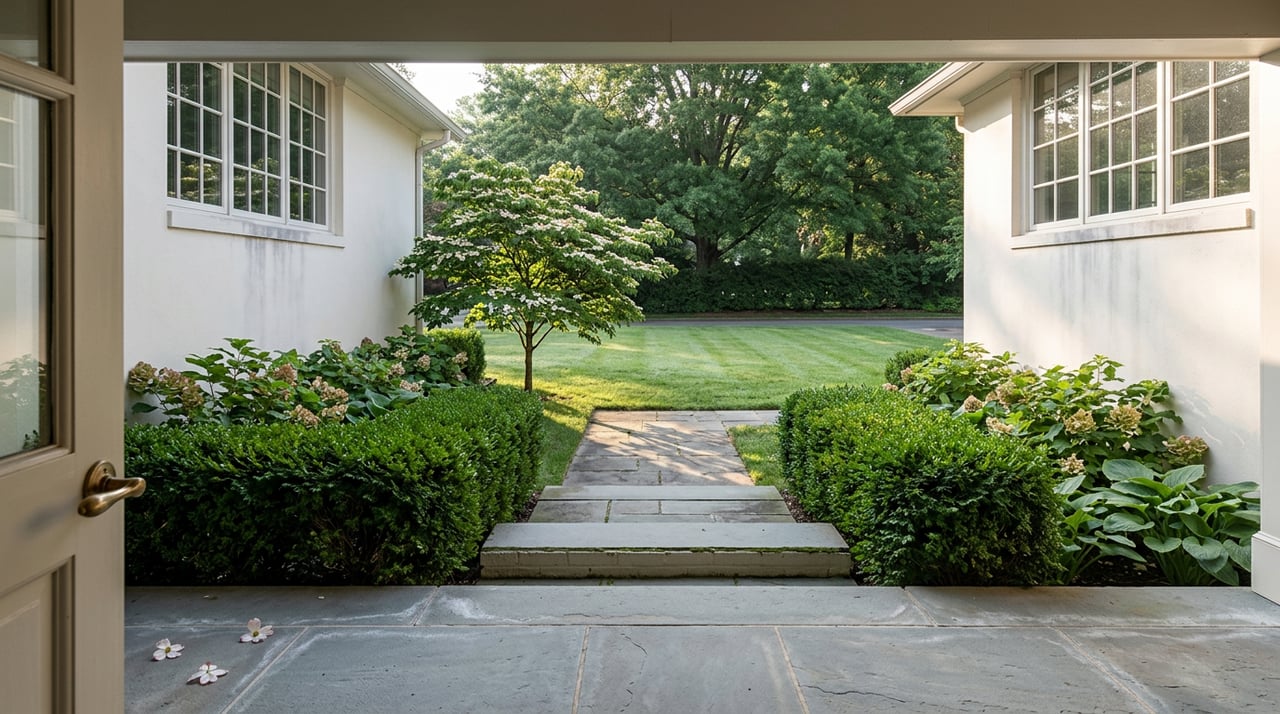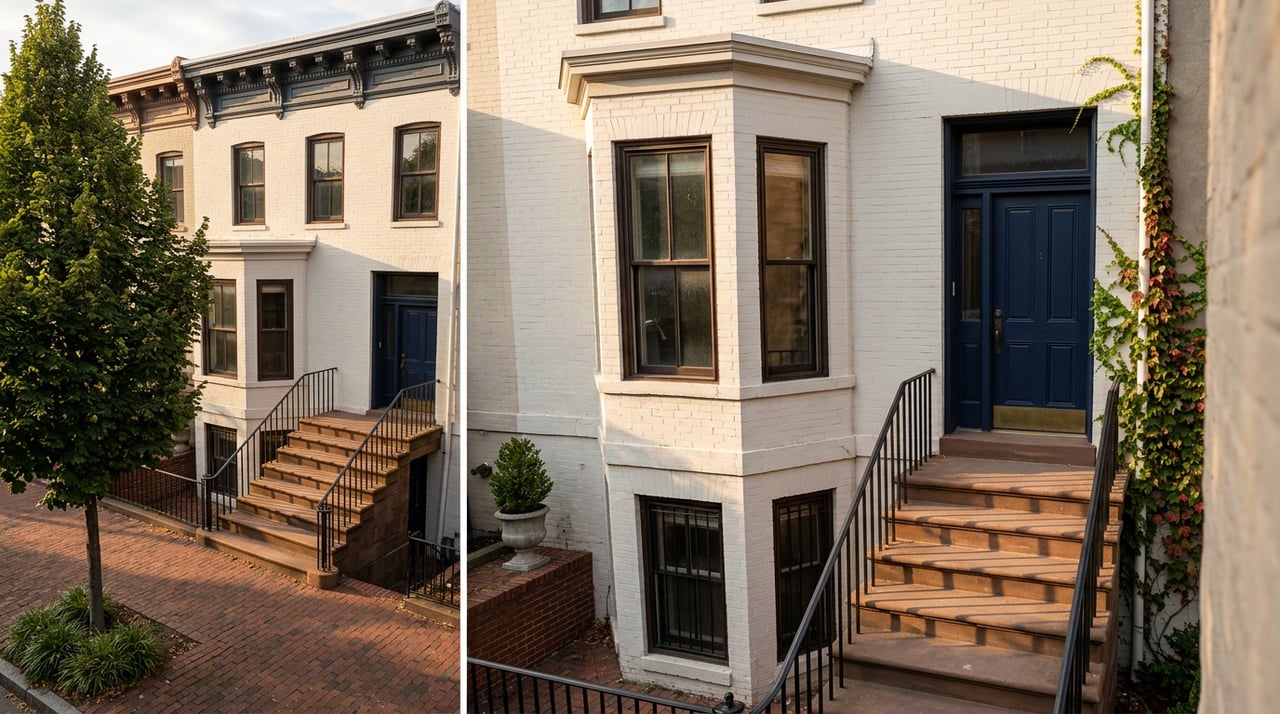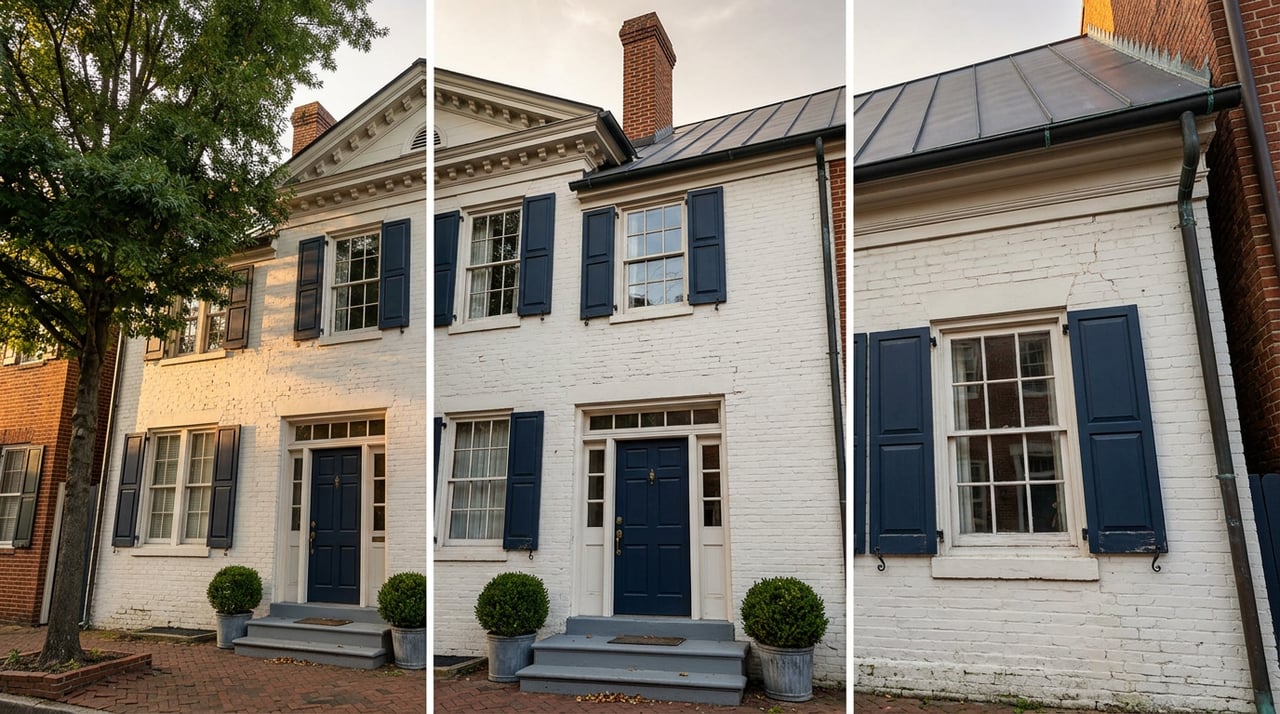
Earlier this year, a Georgetown homeowner submitted plans for a basement addition. On paper, it looked like exactly the kind of project that lands in front of the Old Georgetown Board: new square footage, new construction, a rowhouse in the district Congress carved out in 1950. Instead, the case came back with almost no discussion. A site visit confirmed the addition would not be visible from the public way, and the file was handed off to the Historic Preservation Review Board instead. No design critique. No back and forth on materials. The project simply wasn't the Board's problem.
That outcome tells you more about how Georgetown actually reviews renovations than any summary of the ordinance. The scope of your project, your budget, even how much you're adding to the house, matters less than a narrower question: can someone standing on the sidewalk or in the alley see it? Get that answer right before you draw a single elevation, and you save yourself months.
The Law Is Older Than You Think, and Narrower
The Old Georgetown Act became federal law in 1950 as Public Law 81-808, and its language is specific in a way most homeowners never read. It requires the D.C. government to refer building plans to the U.S. Commission of Fine Arts for a report on exterior architectural features that are "subject to public view from a public highway." Everything downstream of that clause, the monthly meetings, the design guidelines, the back and forth over paint colors and window muntins, exists to answer one question the statute already asked seventy-six years ago: is it visible.
The Commission appoints an advisory committee of architects called the Old Georgetown Board to do the actual reviewing, and the Board's recommendations go to the full Commission of Fine Arts for final action. That structure runs in parallel to the District's own Historic Preservation Review Board, which handles preservation matters citywide. In Georgetown specifically, the two rarely overlap. The Old Georgetown Board takes the projects the CFA has jurisdiction over. HPRB picks up what's left, which usually means work nobody can see from the street.
Visible Covers More Than You'd Guess
If you're picturing "visible" as limited to your front door and window boxes, the Board's own case record this year says otherwise. A rooftop replacement, including flashing, gutters, and downspouts, went through full review, with the Board requiring the copper panels on the gable pediment be replaced in kind and documentation of the existing gutter type before approval. A rooftop solar array came back with instructions specific enough to read like a spreadsheet: certain numbered panels removed, others reoriented from portrait to landscape and shifted closer to the roof edge. In a rowhouse district where buildings sit close together and roof lines are genuinely seen from across the street or from a neighbor's upper floor, "exterior" extends well past the front facade.
Signage draws the same level of attention. When Rag & Bone applied for a storefront sign, the Board negotiated over a single line of text reading "New York," ultimately requiring it move to a window decal to match signage the retailer already had at its M Street location. Love Couture Bridal's new sign was approved only after the applicant agreed to center it on a back panel painted to match the building. A set of proposed pole-mounted directional signs for the district went back for revision over which version of a design, labeled Option D, would carry three stars above the word "Georgetown" versus four. None of this is really about taste. It's about what stays legible and consistent in a streetscape that gets read the same way a building elevation does.
The flip side shows up just as clearly. A proposed Japanese-language sign for Uniqlo was rejected outright as redundant, a rare case of the Board recommending against issuance rather than negotiating changes. The lesson isn't that Georgetown dislikes new retail signage. It's that once something is visible, the Board treats every detail of it as fair game, down to the exact wording.
Interior Work Plays by a Different Set of Rules Entirely
Here's the part that surprises most buyers evaluating a Georgetown renovation project: if your plans don't touch the exterior, none of this applies. The Commission of Fine Arts is explicit that Old Georgetown Board review isn't required when there are no proposed changes to the exterior of the property. A gutted kitchen, a reconfigured basement, new mechanical systems tucked inside walls, all of it can proceed on the District's standard permitting timeline with no design review at all.
That distinction matters for anyone comparing a Georgetown fixer-upper to a similar project outside the historic district. The premium Georgetown charges isn't uniform across every square foot of a renovation. It's concentrated entirely on the parts a pedestrian can see. A buyer weighing a heavy interior gut renovation against an exterior-forward one, a rear addition, new windows, a fence, is really weighing two different regulatory paths, not one.
Your Timeline Runs on the Board's Calendar, Not Yours
Even when a project clearly needs review, the process moves on a fixed monthly rhythm that has nothing to do with how badly you want to break ground. The Old Georgetown Board meets once a month, and its recommendations are compiled into an Old Georgetown Appendix that goes to the full Commission of Fine Arts for final action roughly two weeks later. That two-step structure means a straightforward, uncontested project still needs to clear two separate meeting cycles before a permit can issue, because under the Act, final CFA action is required before the Department of Buildings will release the permit.
Filing deadlines follow the same rigid pattern. For the Commission's May 2026 meeting, the filing deadline fell three weeks ahead, on April 16. Miss a deadline like that and the next opportunity is an entire month away. For a seller trying to complete visible exterior work before listing, or a buyer hoping to close and start renovating quickly, that monthly cadence is often the single biggest scheduling constraint in the whole project, well ahead of contractor availability or material lead times.
There's a second timing detail worth knowing if you're buying a property with previously approved but unbuilt plans. Permit approval from the Old Georgetown Board and Commission of Fine Arts expires after four years. If construction hasn't substantially started by then, whoever owns the property has to resubmit for a new permit review from scratch. Inherited approvals aren't a guarantee. Confirm the clock before you count on someone else's design work.
Why This Matters More in 2026 Than It Did a Few Years Ago
Georgetown is in the middle of an unusually active construction year. EastBanc's Miradoro project at 2715 Pennsylvania Avenue NW is bringing seven luxury residences, including a penthouse up to 3,600 square feet, to what the developer's principal, Philippe Lanier, described as the first crane the neighborhood has seen in six years. The Hoya Hotel on Georgetown University's campus underwent a renovation and rebrand with a reopening slated for spring or summer of this year. The redevelopment of 2900 M Street NW is bringing new life to storefronts that had sat vacant for years.
None of that changes the rules the Old Georgetown Board applies. It does mean more cases are moving through the same monthly cycle, more precedent is being set case by case in real time, and more sellers preparing a listing are running into the review calendar for the first time, often mid-renovation, when it's harder to adjust plans without losing time.
Local preservation groups are active around this too. The Foundation for the Preservation of Historic Georgetown, founded in 1965 specifically because the original Act didn't have enough enforcement teeth, holds preservation easements on 114 properties in the neighborhood as of this spring and continues to weigh in on projects that touch the district's character. The organization has no formal approval authority, but it shapes the conversation your project will eventually have, especially anything near a property already under easement.
A Short List Before You Call an Architect
Three questions settle most of the confusion before it starts:
- Will any part of the finished project be visible from a public street, sidewalk, or alley, including the roofline?
- Does the work touch windows, doors, exterior paint on previously unpainted masonry, fences, or mechanical equipment mounted outside?
- Where does your target start date fall relative to the Board's monthly filing deadline and the CFA meeting roughly two weeks after?
Answer those honestly and you'll know which process you're actually in, and how many meeting cycles stand between your plans and a permit.
What This Means If You're Buying or Selling
For sellers, the practical move is to separate cosmetic staging from anything that touches the exterior, and to start the review clock the moment you know a project is visible, not after your contractor is already scheduled. For buyers evaluating a Georgetown property with renovation upside, the presence or absence of prior OGB approvals on file, and how recently they were granted, tells you something concrete about how much runway is actually left before someone has to start the process over.
This is the kind of detail that separates a design-literate read on a Georgetown property from a generic one. Understanding which parts of a house are regulated and which aren't changes how you price renovation upside, how you time a listing, and how you set expectations with a design team before the first drawing gets made.
If you're weighing a Georgetown purchase with renovation potential, or preparing a home for sale where exterior work is part of the plan, Theo Adamstein brings both the architectural background and the local process knowledge to map out what's realistic and when. Let's Connect.
Frequently Asked Questions
Does a kitchen or basement renovation need Old Georgetown Board approval? Not if the work stays entirely inside the house. The Commission of Fine Arts only requires review when a project changes the exterior of the property or something visible from public space.
How long does the review process actually take? At minimum, expect two full meeting cycles: one Old Georgetown Board meeting where your project is reviewed, and a Commission of Fine Arts meeting roughly two weeks later where the Board's recommendation is formally adopted. Miss a filing deadline and add another month.
What happens to an approved renovation plan if I don't build right away? Old Georgetown Board and Commission of Fine Arts permit approvals expire four years after issuance if construction hasn't substantially started. After that, the project needs to go through review again under current guidelines.