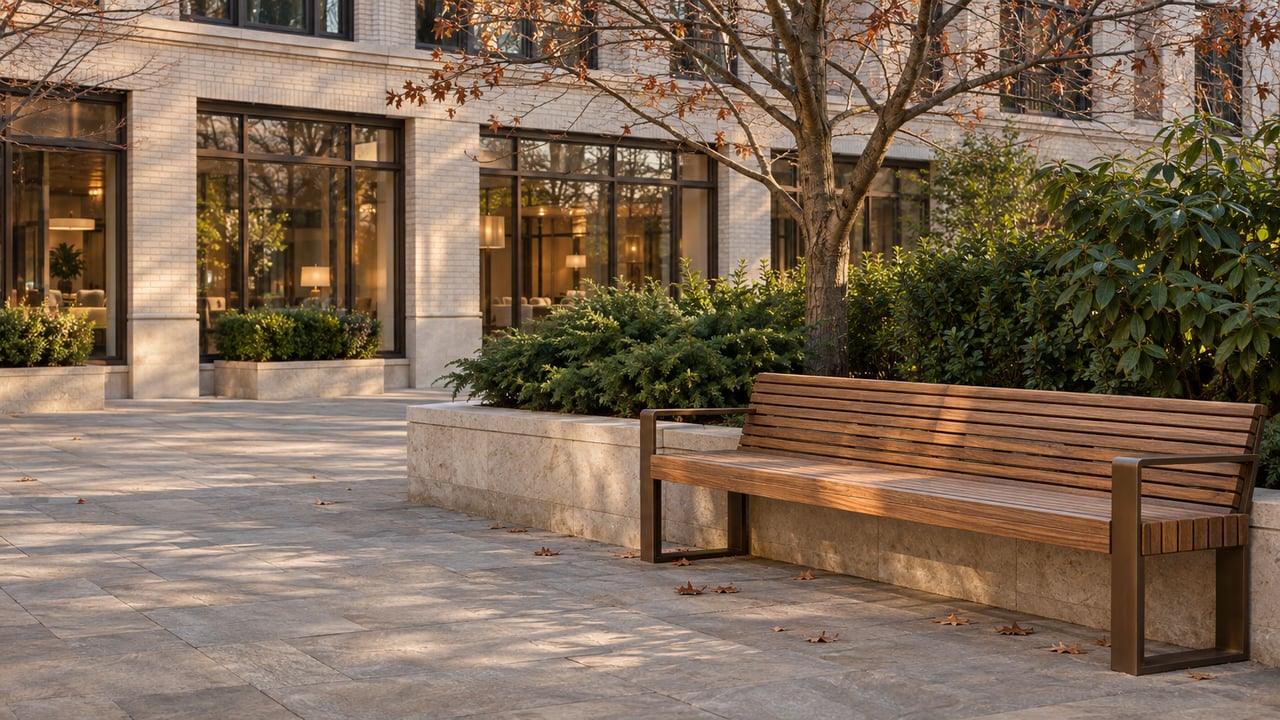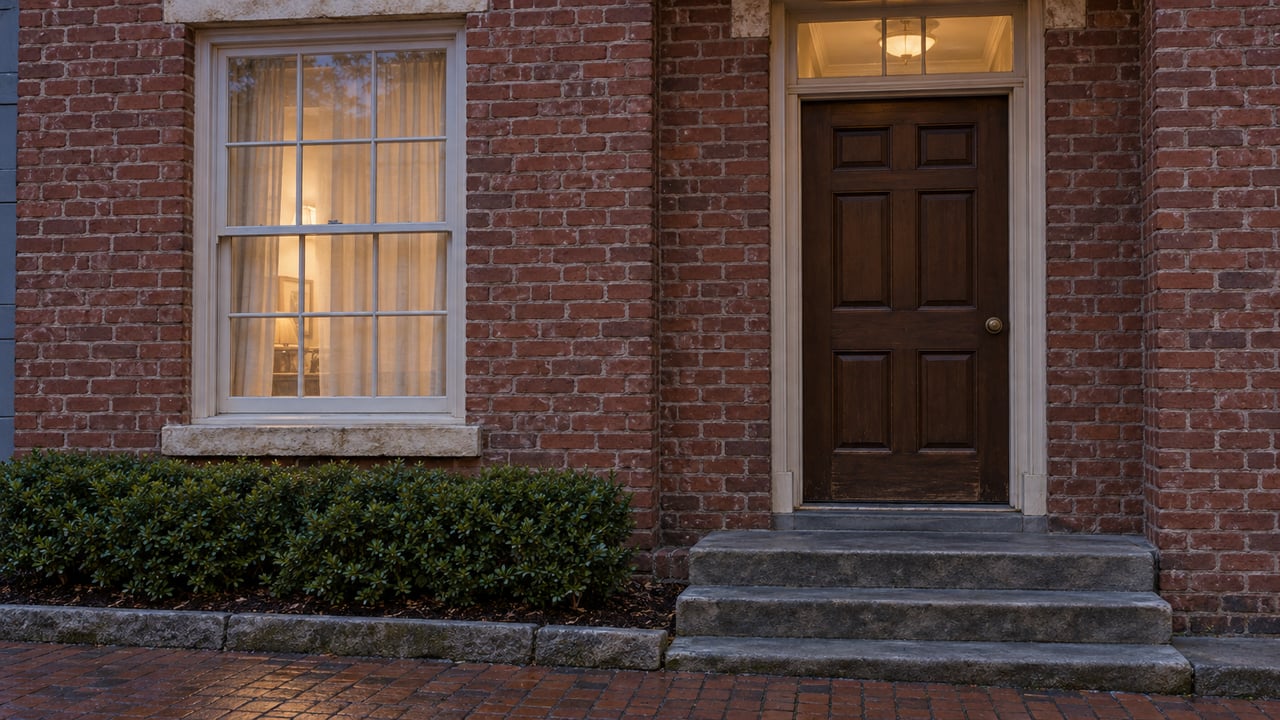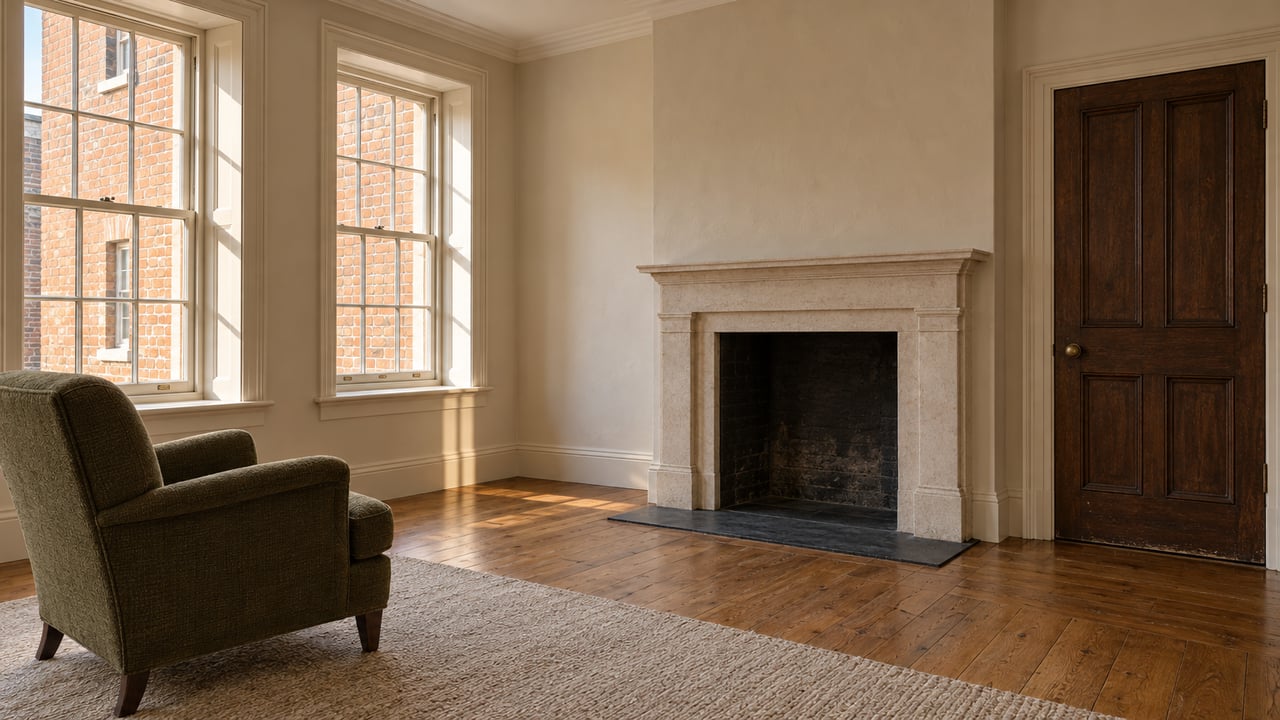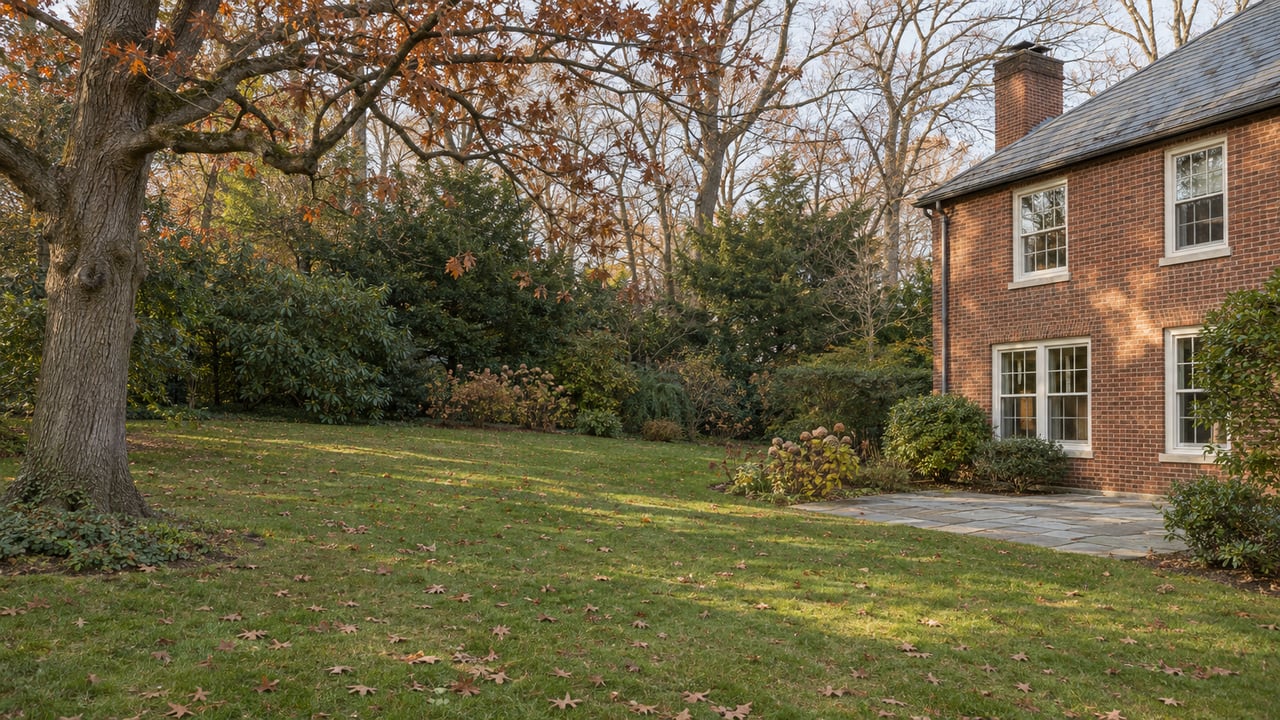
On October 1, a 1947 house at 5701 Sherier Place NW sold for $850,000. That price was below the city's assessed value of $1,023,360. Of that assessment, the District put $657,150 on the 4,022-square-foot lot and $366,210 on the house. Read the sale against those numbers and the buyer paid about $193,000 above the land value for everything with walls and a roof.
That sale explains how a large share of the Palisades market prices. The portals give a single neighborhood median, and the median blends two kinds of sales that run on different logic. One kind is priced as a house. The other is priced as a building lot that happens to have a house on it. A buyer who knows which kind they are looking at can read an asking price far more accurately.
The District Already Splits Every House in Two
DC's Office of Tax and Revenue assesses every residential parcel as two figures, land and improvements, and publishes both in its Integrated Tax System public extract, which updates daily. In the Palisades, that split reads as a market signal, because land here is expensive enough to outweigh many of the houses sitting on it.
Across the 721 single-family records that OTR files under its Palisades assessment neighborhood, land assessments add up to about $140 per square foot of lot, weighted by lot area, in the extract updated in November 2026. At that rate, a 6,000-square-foot lot carries roughly $840,000 of value before anyone looks at the house. That figure is the floor under every older house on a full-size lot in the neighborhood.
Why Sherier Place Holds So Many Modest Houses on Valuable Ground
The Palisades never had one developer setting a consistent standard of house. The DC Office of Planning's Ward 3 Heritage Guide dates the promotional plat for "Palisades of the Potomac" to 1890. Its Canadian backers pictured Victorian villas on the river bluffs, and the guide says the suburb instead "grew haphazardly over a long time." The Washington and Great Falls Railway's electric cars reached the area in 1895, by the guide's account. A DDOT feasibility study dates construction of the Glen Echo line to 1896 and records that service ended in 1960. The line's corridor is now the Palisades Trolley Trail.
The car brought the next wave. The heritage guide credits 1920s automobile-era building with filling the Palisades with modest "wood-frame kit homes," often with a one-car garage on the alley. One example is 5741 Sherier Place, identified in a 2017 DC House Smarts post as a 1922 Sears "Roanoke." Those houses were bought from a catalog and built on lots platted for something grander. A century later, the gap between a modest house and generous ground shows up in the assessment split.
The neighborhood has seen this change happen before. The Washington Post reported in November 2007 that a 1925 Sears catalog house on Sherier Place came down after a neighborhood dispute over preserving it. The 2020 heritage guide notes that older houses in the Palisades and elsewhere in Ward 3 have been replaced by larger new ones.
5113 Sherier Place, Where the House Was a Rounding Error
The clearest recent case sits a few blocks from that 2007 site. OTR records a $910,000 sale of 5113 Sherier Place NW in November 2025. The parcel is a 1941 house on a 6,250-square-foot lot. The District assessed the land at $797,190 and the house at $181,520, which makes the building less than a fifth of the total. The property was marketed as a cottage with a ready-to-use raze permit. A new house was completed on the site in 2026 and was recently offered at about $2.65 million.
The buyer at $910,000 was paying for 6,250 square feet of Sherier Place, and the price was about $113,000 over the land assessment. That is the same pattern as 5701 Sherier, carried one step further.
Four Palisades Sales, Split the District's Way
The pattern does not apply to every older-looking house. It depends on lot size and on how much house is there. These four sales all fall inside OTR's Palisades assessment neighborhood.
| Address | Built | Lot, sq ft | Land assessed | Building assessed | Land share | Sale price, date |
|---|---|---|---|---|---|---|
| 5113 Sherier Pl NW | 1941 | 6,250 | $797,190 | $181,520 | 81% | $910,000, Nov 2025 |
| 5701 Sherier Pl NW | 1947 | 4,022 | $657,150 | $366,210 | 64% | $850,000, Oct 1, 2026 |
| 4561 MacArthur Blvd NW | 1990 | 4,075 | $661,090 | $770,660 | 46% | $1,790,000, Oct 14, 2026 |
| 5305 Sherier Pl NW | 1978 | 2,035 | $487,750 | $820,220 | 37% | $1,250,000, Oct 6, 2026 |
The two houses at the bottom of the table were priced as houses. 5305 Sherier sits on a lot barely a third the size of 5113's, so no builder would pay much for the ground alone, and its 1978 house carries most of the value. 4561 MacArthur's 1990 house sold about 25 percent above its total assessment. A buyer paid well above land value there because the house itself was what they wanted.
The two at the top were priced as land. Both are 1940s houses on lots of 4,000 square feet or more, and both sold for less than their total assessment. The Sherier Place sales suggest how the market treats an older house that would need significant work: the value of the building can drop toward zero while the lot holds its price. The lowest prices in the Palisades go to houses on good ground, and the ground sets the floor.
Why the Neighborhood Median Jumps Month to Month
The headline numbers carry both kinds of sale at once. The independent site palisadesdc.net, which compiles recorded deeds from OTR, showed a house median of $1.80 million for the 12 months ending with its November 15, 2026 update. That is up from $1.76 million in the prior 12 months, a change the site classifies as steady. Its monthly house medians swing much more widely. The house median was $1.42 million in April 2026, jumped to $3.23 million in May, and came in at $1.43 million in October.
Those monthly figures rest on a small number of sales, between 12 and 40 a month over the past year. In a neighborhood where a 1940s cottage priced near its land value and a larger house well above assessment can close in the same month, a handful of sales on either side can move the median a long way. The site builds its sales area from OTR's Palisades and Foxhall assessment neighborhoods plus sub-areas of Wesley Heights, Spring Valley, Berkley and Kent, and it describes that area as overlapping the Palisades boundary without matching it exactly. In the 60 days before its November 15 update, sales of houses and condos in that area had a median price of $1.55 million and a median of $756 per square foot. Of 322 sales in the 12 months to that date, 240 closed above the District's assessed value. Both Sherier Place cottages at the top of the table sold below assessment, which puts them in the smaller group.
What This Means for a Buyer Weighing an Older House Here
For a buyer comparing the Palisades with Spring Valley, Wesley Heights or Chevy Chase, start by checking the land share. The District's split for any address is public, and dividing the asking price by the land assessment shows quickly whether a seller is pricing a house or a lot. An older house listed near its land value on a lot of 4,000 square feet or more is competing with builders, whatever the listing says about its charm.
The same split shows where design judgment pays off. A high land share on a 1920s kit house tells a buyer what the market will pay for the ground. Whether the house on it deserves restoration is a separate question, and only an inspection of its structure and plan can answer it. The heritage guide also points to the neighborhood's other architectural tradition, the spacious Modernist houses on the wooded slopes of Chain Bridge Road and University Terrace, such as the 1950 Howard B. Myers House at 2940 Chain Bridge Road. Houses like those are bought for the architecture, and their price follows the building.
For a sense of the corridor around these blocks, our earlier pieces on MacArthur Boulevard's storefronts and the Palisades firehouse centennial cover the neighborhood beyond the deeds.
Frequently Asked Questions
Where can I see the land and building split for a specific Palisades address? OTR publishes both figures for every parcel. You can look them up through the Office of Tax and Revenue or in the District's open-data extract linked above.
Is a lower-priced Palisades house a bargain? Sometimes it is, but the recent below-assessment sales on Sherier Place, in November 2025 and October 2026, were older houses on larger lots, and buyers priced them close to their land value. The low price reflects a building that buyers valued at very little.
Does a high land share mean the house will be torn down? No. A high land share means the lot makes up most of the value. Whether the house is worth keeping depends on its structure and its design, and that takes a walk-through, not a spreadsheet.
If you are weighing an older Palisades house and want to know whether you are buying a building or a lot, Theo Adamstein brings an architect's training to that evaluation, reading the District's land and building figures for the address alongside the house itself and its renovation potential. Let's Connect.