If you have ever walked Dupont Circle and felt like one block looked grand and ceremonial while the next felt intimate and quietly intricate, you were noticing one of the neighborhood’s greatest strengths. Dupont Circle rewards slow looking, especially if you care about architecture, historic detail, or the kind of homes that reveal more over time. This guide will help you spot the hidden gems that make the area so layered, memorable, and relevant for today’s buyers and sellers. Let’s dive in.
Why Dupont Circle Feels So Distinct
Dupont Circle’s historic character comes from more than a collection of attractive old buildings. The Dupont Circle Historic District was established in 1976, expanded in 1984, and expanded again and amended in 2005, with a period of significance from 1875 to 1931. Preservation documents describe the neighborhood as a striking contrast between palatial mansions on broad diagonal avenues and rowhouses on the tighter grid streets.
That contrast is part of what makes the area so visually rich. The circle itself sits where Massachusetts, Connecticut, and New Hampshire Avenues meet P Street and 19th Street NW, reflecting the larger L’Enfant plan of diagonal avenues crossing a city grid. On foot, that layout creates a sequence of changing views, shifting scales, and architecture that feels connected to the public realm around it.
Start With the Street Pattern
Before you focus on any single façade, notice how the streets shape your experience. The diagonal avenues tend to feel more formal and processional, while the grid streets feel more residential and close-up. That difference helps explain why Dupont Circle can feel like several neighborhoods layered into one.
The avenues frame major houses, apartment buildings, and prominent corners. The grid streets invite a slower look at stoops, bays, brickwork, and rooflines. If you are evaluating homes here, that block-by-block variation matters because it directly affects light, privacy, views, and the overall feel of a property.
Hidden Gems on the Rowhouse Blocks
Look for Rhythm, Not Repetition
One of Dupont Circle’s most rewarding qualities is that its rowhouse blocks are not uniform in the flat, repetitive sense. Preservation documents note that the blocks work because each house is different while the overall scale remains consistent. Projecting bays create an alternating rhythm along the street, and that rhythm gives the blocks their energy.
For a design-minded buyer, this is a useful clue. A block can feel cohesive without every home looking the same, and that often creates more visual interest from both the sidewalk and the interior rooms facing the street.
Notice Queen Anne and Romanesque Details
Many of the grid-street houses date from the 1880s through the first decade of the 20th century. Styles identified in preservation records include Queen Anne, Richardsonian Romanesque Revival, Renaissance Revival, and Georgian Revival. Queen Anne examples are especially easy to read once you know what to look for.
Keep an eye out for:
- Gables
- Varied chimneys
- Irregular massing
- Cut-brick corners
- Turrets
- Terra cotta or brick ornamentation
- Bay projections
- Roofline variation
These details are a big part of why Dupont’s rowhouse streets feel textured rather than predictable. Even modest shifts in brick pattern or roof shape can change the personality of a house.
Blocks Worth Slowing Down For
Preservation documents identify several especially strong rowhouse blocks in the district. Among them are the 1900 block of S Street, the 1400 and 1700 blocks of 21st Street, the 1700 block of P Street, Jefferson Place, and the 1700 block of N Street.
The 1700 block of N Street stands out in particular. The historic district nomination calls it one of the most varied and architecturally significant blocks in the district, and notes that it remains largely intact. If you want to understand how much richness can fit into one residential block, this is a strong place to begin.
Mansion-Scale Architecture Around the Circle
Read the Victorian-to-Classical Shift
The avenues around Dupont Circle tell a different architectural story than the rowhouse streets. Most mansions on Massachusetts and New Hampshire Avenues were built between 1895 and 1910, when Beaux-Arts taste had become influential nationally. Within the district, you can find Beaux-Arts, Chateauesque, Renaissance Revival, and Georgian Revival examples by major architects.
One of the most revealing comparisons is the Patterson House at 15 Dupont Circle and the Blaine Mansion at 2000 Massachusetts Avenue. Preservation records use this pairing to show the transition from Victorian exuberance to turn-of-the-century classicism. If you compare the two, you can see how Dupont Circle evolved rather than arriving all at once.
Spot Texture and Vertical Drama
The Blaine Mansion is a rare early survivor from the 1880s. Its molded brick, iron cresting, carved wood, and irregular roofline stand apart from the later marble mansions nearby. It is a reminder that some of Dupont’s most compelling architecture is not the most symmetrical or restrained, but the most textured and expressive.
The Heurich House at 1307 New Hampshire Avenue offers another important reference point. Preservation records describe it as a brownstone-and-brick house with a corner turret, varied massing, and an elaborate porte cochere. For anyone drawn to historic homes with sculptural presence, this is exactly the kind of building that shows how rich Dupont’s older architecture can be.
Watch How Corner Lots Change the Design
Corner properties often receive more elaborate architectural treatment than mid-row houses, and Dupont Circle gives you many chances to see that principle in action. The Belmont House at 1618 New Hampshire Avenue is a strong example, positioned on a triangular corner lot that reinforces the formal character of the diagonal street system. The building does more than occupy the site. It helps shape the street experience around it.
That is an important lens for buyers and sellers alike. In Dupont Circle, value and appeal are often tied not just to square footage or finish level, but to how a building sits on its block and contributes to the surrounding streetscape.
Apartment Buildings as Architectural Bridges
Dupont Circle is not only a story of mansions and rowhouses. Historic district records note that large apartment buildings and low-scale commercial buildings also contribute to the neighborhood mix. These buildings often act as visual bridges between the ceremonial avenues and the more intimate residential streets.
A good example is the McCormick Apartments at 1785 Massachusetts Avenue, built in 1915 to 1917. Preservation documents describe it as one of Washington’s first luxury apartment buildings, designed to complement the Beaux-Arts character of the neighborhood. That matters because it shows how multi-family living has long been part of Dupont Circle’s architectural identity.
For today’s buyers, this is especially relevant. If you are considering a condo or apartment-style residence in Dupont, you are not stepping outside the neighborhood’s historic pattern. In many cases, you are participating in it.
The Beauty of Adaptive Reuse
Historic Exteriors, Modern Living
One of the most interesting things about Dupont Circle is that preservation and change have long coexisted. The historic district nomination notes that many former mansions now house embassies, chanceries, and private clubs, while rowhouses have been renovated for single-family, apartment, and office use. In other words, adaptation is part of the neighborhood’s story.
That is useful context if you are weighing the pros and cons of a converted residence. In Dupont Circle, preserving the public face while updating the private function is not unusual. It is one of the ways the neighborhood has remained livable and relevant across generations.
Condo-Era Examples to Notice
The Ampeer Residences at 15 Dupont Circle illustrate this clearly. A DC government profile states that the 1903 mansion by Stanford White was reconceived and redesigned in 2014, with the current complex including a 70-unit tower offering condominiums from studios to one-bedroom suites. The restored mansion portion retains features such as a former ballroom, a paneled library, and a marbled foyer and staircase.
Another example appears at 1508 to 1512 21st Street NW, where façade restoration, interior renovation, and rear and roof additions were proposed for three rowhouses built between 1889 and 1898. According to the HPRB report, the historic street façades were to be retained while the interiors and rear massing were reorganized. That pattern captures a very Dupont Circle idea: keep the architectural presence that shapes the street, then adapt the building for contemporary use.
What Buyers Should Notice on a Walkthrough
If you are touring homes in Dupont Circle, it helps to look beyond finishes and staging. The preservation documents repeatedly point to a handful of visual cues that define the neighborhood’s architecture. Once you know them, you can read a block or a building much more clearly.
Pay attention to:
- Corner turrets
- Bay projections
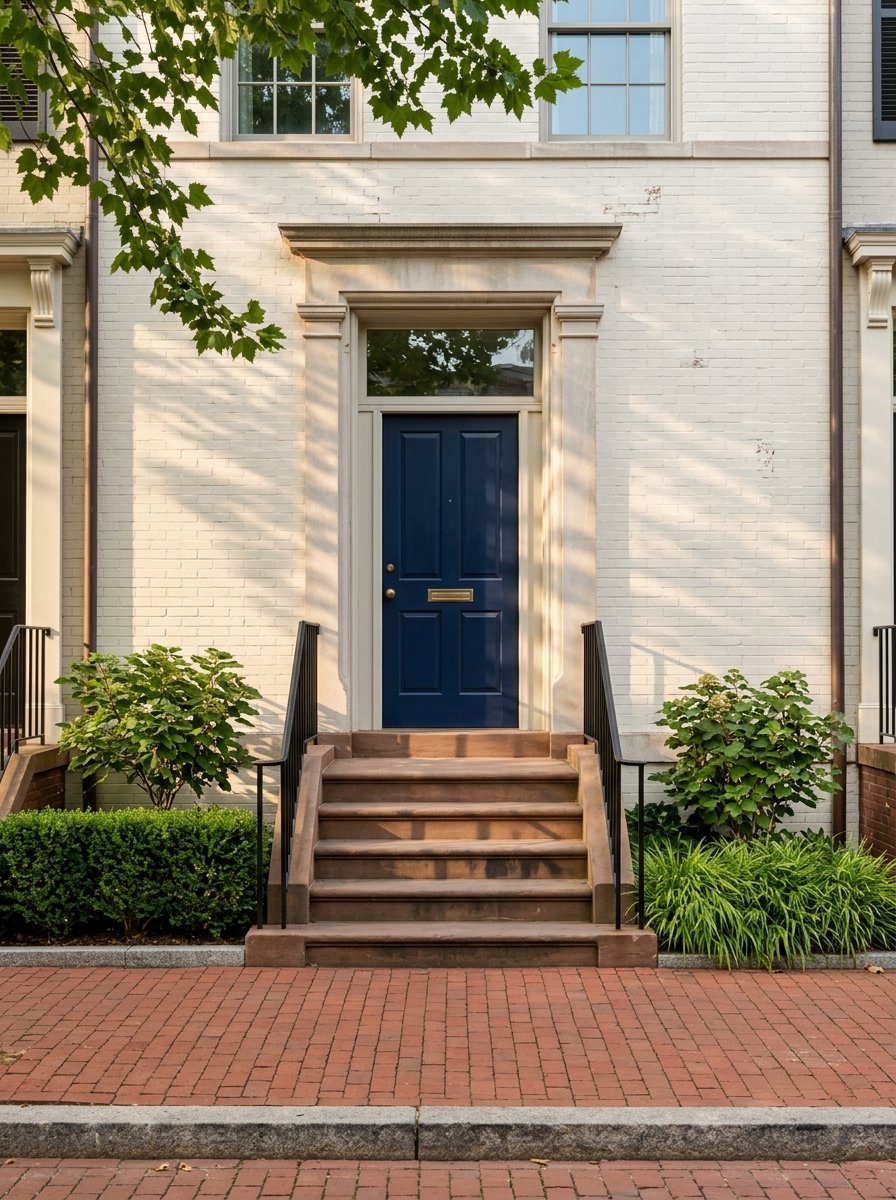
- Stoops
- Carved brick and stone
- Roofline variation
- Corner-house detailing
- The relationship between a façade and the street
These features can signal more than style. They often hint at interior layout, window placement, entry sequence, and the amount of architectural individuality a home offers.
Why This Matters for Buyers and Sellers
For buyers, architectural literacy helps you see the difference between a property that is merely well located and one that has lasting character. In a neighborhood like Dupont Circle, the strongest homes often carry value in their proportions, materials, siting, and preserved detail. Those qualities may not always show up in a simple online search, but they are often what make a home memorable.
For sellers, that same architectural story can shape presentation strategy. A home with a distinctive bay, turret, historic brickwork, or an unusually strong position on the block benefits from thoughtful visual storytelling and careful preparation. In a design-conscious market, those details are not background. They are often central to how buyers connect with a property.
Dupont Circle remains compelling because it offers several architectural experiences at once: mansion-lined avenues, richly varied rowhouse streets, historic apartment buildings, and adaptive-reuse residences that bring old structures into present-day life. If you know what to look for, the neighborhood reveals itself slowly, and that is part of its enduring appeal.
If you are thinking about buying or selling an architecturally distinctive home in Dupont Circle, working with someone who understands design can make a meaningful difference. Theo Adamstein brings architectural insight, strategic presentation, and hands-on guidance to help you evaluate character, highlight value, and move with confidence.
FAQs
What makes Dupont Circle architecture distinctive?
- Dupont Circle stands out for its mix of grand avenue mansions, varied late-19th-century and early-20th-century rowhouses, historic apartment buildings, and adaptive-reuse properties within a historic district shaped by both diagonal avenues and grid streets.
Which Dupont Circle blocks are known for strong rowhouse architecture?
- Preservation documents highlight the 1900 block of S Street, the 1400 and 1700 blocks of 21st Street, the 1700 block of P Street, Jefferson Place, and especially the 1700 block of N Street.
What architectural details should buyers look for in Dupont Circle homes?
- Helpful details to notice include turrets, projecting bays, stoops, carved brick and stone, roofline variation, cut-brick corners, varied chimneys, and the more elaborate treatment often found on corner properties.
Are condos and multi-family homes part of Dupont Circle’s historic character?
- Yes. Historic records show that apartment buildings and adaptive reuse have long been part of the neighborhood, with former mansions and rowhouses often updated for multi-family or other contemporary uses while preserving their exterior character.
Why does Dupont Circle feel different from block to block?
- The neighborhood combines formal diagonal avenues with tighter residential grid streets, and that street pattern creates noticeable changes in scale, views, building type, and architectural expression as you move through the area.