If you are buying in Kalorama, you are not just shopping for square footage. You are stepping into one of Washington’s most design-conscious and tightly held residential enclaves, where inventory is limited, architecture matters, and the right house may require both quick judgment and careful restraint. In this guide, you’ll learn how to approach Kalorama with the mix of discretion, design awareness, and due diligence that this market deserves. Let’s dive in.
Why Kalorama feels different
Kalorama is a small, high-value market with very limited supply. Zillow’s Kalorama data shows an average home value of $1,346,878, up 2.0% year over year, with only 11 homes for sale as of February 28, 2026. That kind of inventory profile can create urgency when a compelling property comes to market.
Other market trackers point to the same pattern, even when they define the area a bit differently. Realtor.com’s Sheridan-Kalorama Historic District market page reported 15 homes for sale in February 2026, with a median listing price of $1,822,500 and a median 63.16 days on market. Together, those numbers suggest a market where availability is thin, pricing is meaningful, and timing matters.
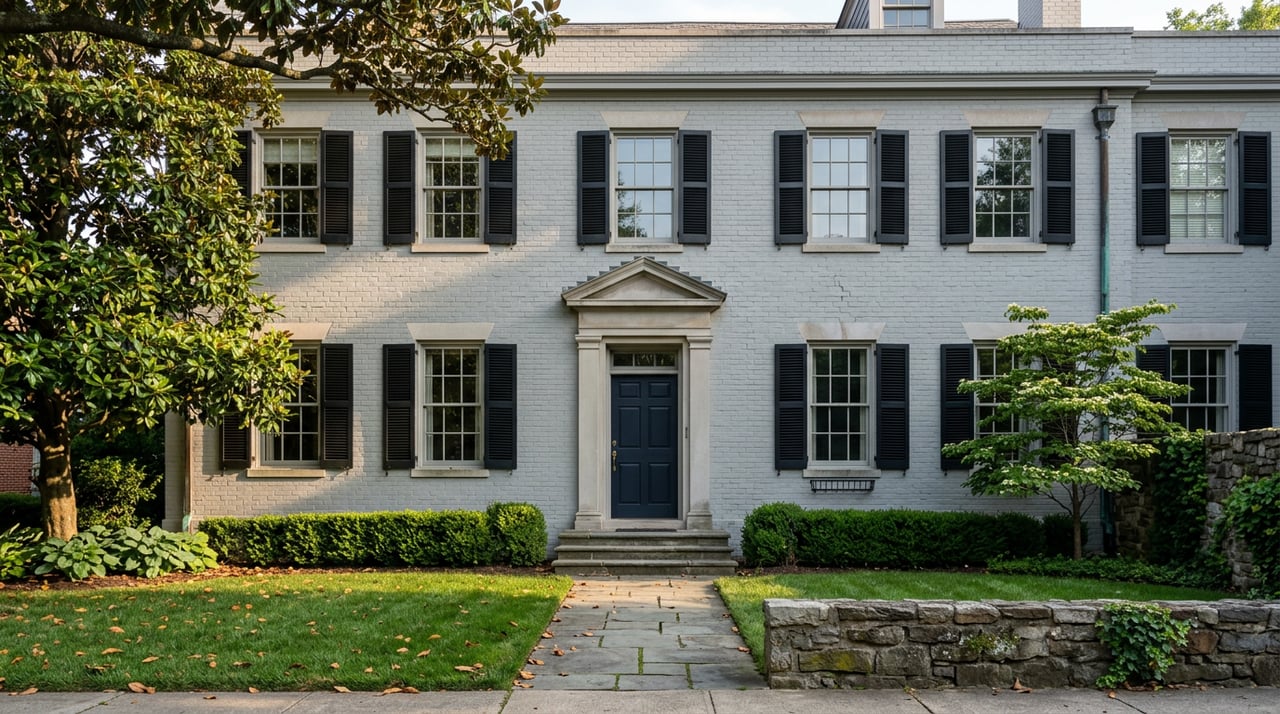
Kalorama also carries a distinct physical and diplomatic presence. DC’s Ward 2 planning materials describe Sheridan-Kalorama and Dupont Circle as places of grand Victorian townhomes and stand-alone mansions, many occupied by foreign embassies and chanceries. For you as a buyer, that often means privacy, controlled access, and building character are not side notes. They are part of the purchase decision.
Understand Kalorama’s historic layers
One of the biggest mistakes buyers make is treating Kalorama like a single, uniform neighborhood. In reality, it includes distinct historic districts and subareas, each with its own context, boundaries, and architectural rhythm. That matters when you are comparing properties, planning updates, or trying to understand what gives a block its visual coherence.
The two historic districts most relevant to many buyers are Kalorama Triangle and Sheridan-Kalorama. Kalorama Triangle was designated in 1987 with a period of significance from 1893 to 1939, while Sheridan-Kalorama was designated in 1989 with a period of significance from 1890 to 1945. These are not casual labels. They shape how exterior changes are reviewed and how the neighborhood’s architectural character is protected.
Kalorama Triangle, in particular, developed after streetcar lines opened along Columbia Road and 18th Street, and it includes spacious rowhouses and large early 20th-century apartment buildings. The district’s historic documentation notes strong examples of Arts and Crafts, Georgian Revival, and Mediterranean styles, along with an unusually intact original appearance. That helps explain why certain homes in Kalorama feel so visually complete. The appeal often comes from proportion, craftsmanship, and continuity, not simply age.
Why discretion matters when buying here
In a neighborhood known for embassy presence, mansion-lined streets, and long-term ownership, buying strategy often needs to be measured and private. Public visibility is not always an advantage in this kind of market. Some buyers want quiet scheduling, thoughtful access, and a process that respects the privacy expectations that often come with high-value urban homes.
Discretion also matters because inventory is limited. When only a small number of properties are available, every showing, conversation, and offer can carry more weight. You want a process that lets you move decisively without becoming careless.
For design-focused buyers, discretion has another benefit. It creates space for clear thinking. Instead of reacting to scarcity alone, you can evaluate whether a property truly fits your goals, whether that means immediate enjoyment, a careful renovation plan, or a long-term hold in one of Washington’s most architecturally significant residential pockets.
Approach design with respect for context
Kalorama can be deeply rewarding for buyers who appreciate architecture, but it asks for discipline. If you plan to renovate, the goal is usually not to erase the old fabric. It is to modernize intelligently while respecting the elements that give the property its identity.
The National Park Service standards for rehabilitation offer a useful framework. Historic materials and features should be preserved where possible, and new work should be differentiated from the old while remaining compatible in massing, size, scale, and architectural features. In practical terms, that means thoughtful updates often outperform aggressive ones.
DC’s guidance on additions makes this even more concrete. Compatibility is evaluated through factors like setback, orientation, scale, height, materials, roof shape, and ornamentation. Front additions are usually discouraged, while rear additions are often more acceptable when they are plain or not visible from a public street or alley.
For many Kalorama properties, that leads to a smart design principle: preserve the street-facing facade and concentrate bolder contemporary changes at the rear or inside. That approach often aligns more naturally with the district’s historic rhythm while still giving you room to improve function, light, and livability.
Design details worth studying early
If you are comparing properties, pay close attention to features that affect both character and future costs, such as:
- Original windows and whether they have been repaired or replaced
- Masonry condition and any signs of overly aggressive cleaning or patching
- Cornices, porches, and decorative trim
- Rooflines and visible rooftop alterations
- Rear additions and how seamlessly they relate to the original structure
In a neighborhood where styles like Arts and Crafts, Georgian Revival, and Mediterranean are part of the architectural vocabulary, small design decisions can have outsized visual impact. A restrained intervention often ages better than a trend-driven one.
Do due diligence beyond the usual checklist
In Kalorama, due diligence should extend well beyond a standard tour and general inspection mindset. Older homes and historic designations mean you need to understand both the building itself and the record behind it. That is especially important if you are buying with renovation plans in mind.
The District’s historic preservation review process is designed to encourage early discussion of rehabilitation plans. The Historic Preservation Office can approve in-kind repair and replacement, minor alterations, and some small additions that do not affect historic character. But for exterior work on a historic property, a building permit triggers preservation review, and historic properties cannot use postcard permits.
That means your due diligence should include more than asking, “Can I renovate?” A better question is, “What work is likely to be approvable here, and what evidence supports that?” The answer can affect budget, timing, and whether a property still makes sense for your goals.
Public records to review
Before you move forward, it is wise to check public records that can clarify a property’s history and current status. DC’s real property tax database provides access to assessments, values, and parcel information. The Recorder of Deeds is also the District’s official repository for land records and public instruments.
These records can help you verify ownership history, review assessments, and identify recorded documents that may matter to your purchase. In a neighborhood with long ownership cycles and meaningful renovation histories, that context is useful.
Pay special attention to health and renovation risk
Older housing stock deserves a more technical eye, especially if your plan includes cosmetic changes right after closing. Lead-based paint is a key example. EPA lead disclosure rules require sellers, landlords, agents, and property managers to provide lead-based paint disclosure information before a buyer signs a contract for pre-1978 housing.
EPA also requires lead-safe certified contractors for renovation, repair, and painting projects that disturb lead paint in pre-1978 homes. In practice, that means window replacement, surface prep, and similar updates should be treated as regulated work. They are not simple weekend projects.
Radon is another smart item to test. The CDC states that testing is the only way to know whether a home has high radon levels and recommends testing when preparing to buy or sell, as well as before and after renovations. EPA’s action level is 4 pCi/L, and the District’s DOEE offers free radon test kits to residents.
A practical buying lens for Kalorama
When inventory is scarce and architecture carries real weight, it helps to evaluate each property through three filters: discretion, design, and due diligence. This keeps you from overvaluing surface polish or underestimating what thoughtful work may require.
Here is a practical way to think about it:
| Lens | What to ask |
|---|---|
| Discretion | Does the property offer the level of privacy, access control, and setting you want? |
| Design | Are the home’s original proportions, materials, and details worth preserving? |
| Due diligence | Do the historic rules, records, and condition findings support your renovation or ownership plan? |
That framework can help you separate a merely expensive home from one that is genuinely well-positioned for your needs. In Kalorama, that distinction matters.
Buying well in a limited-supply market
Because Kalorama is a low-inventory market, preparation matters before the right listing appears. You want clarity on priorities, tolerance for renovation, and the kinds of compromises you will or will not make. Waiting until a property surfaces is often too late.
This is also where design fluency becomes valuable. A home that looks imperfect at first glance may hold strong architectural bones and a renovation path that preserves character while improving function. On the other hand, a polished presentation may hide poor alterations, costly exterior issues, or changes that are harder to reconcile with preservation guidance.
In a neighborhood like Kalorama, buying well is rarely about moving fastest alone. It is about seeing clearly, asking the right questions early, and understanding what gives a property both lasting beauty and practical upside.
If you are considering a move in Kalorama and want a design-literate, discreet approach to evaluating the market, Theo Adamstein offers buyer representation shaped by architectural insight, careful analysis, and concierge-level guidance.
FAQs
What makes buying a home in Kalorama different from other DC neighborhoods?
- Kalorama is a small, high-value market with limited inventory, significant historic architecture, and a preservation context that can affect both buying strategy and future renovation plans.
What should buyers know about historic district rules in Kalorama?
- Many properties fall within historic districts, so exterior work may require permit review and Historic Preservation Office clearance, especially for additions, facade changes, and visible alterations.
What design updates are usually most compatible in Kalorama historic homes?
- Preservation guidance generally supports retaining important historic materials and features, with more flexibility for compatible rear or interior changes than for prominent front-facing alterations.
What due diligence steps are especially important for older Kalorama homes?
- Buyers should review public records, understand any historic review implications, and investigate condition issues common to older housing, including lead-based paint compliance and radon testing.
What market conditions should buyers expect in Kalorama right now?
- Current research points to a thin, expensive market with limited active listings, which means timing, pricing discipline, and preparation are especially important for buyers.