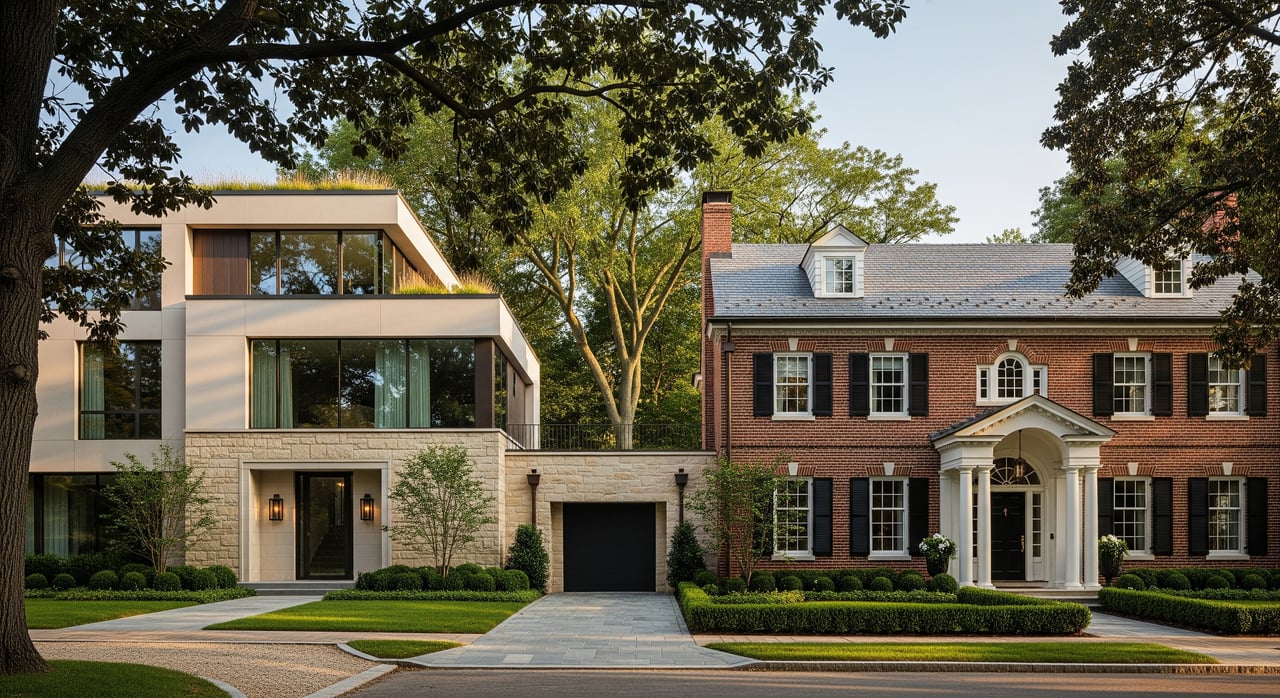
Torn between a crisp new build and the charm of a beautifully renovated classic in Chevy Chase? You are not alone. The decision blends aesthetics, timelines, approvals, energy performance, and long-run maintenance. This guide walks you through the key tradeoffs specific to Chevy Chase so you can choose with confidence. Let’s dive in.
Chevy Chase context: what shapes your choice
Chevy Chase is an established inner suburb of Washington, D.C., made up of several municipalities and unincorporated areas. That patchwork can influence permitting, design review, and what you can change on a property. The housing stock skews early to mid 20th century, with Colonial, Tudor, Craftsman, and Cape Cod homes, plus some mid-century and newer builds.
Lots often feature mature trees and established landscaping, and many parcels are moderate in size. That can limit the footprint for additions or new construction. Proximity to DC routes like Connecticut Avenue, the Friendship Heights Metro area, and Montgomery County Public Schools matters to many buyers, but school assignments vary by address.
New build vs renovated: quick overview
When a new build fits
If you want modern systems, high insulation values, open layouts, and predictable near-term maintenance, a new build can be compelling. New construction typically meets current codes and often includes staged builder warranties. In Chevy Chase, plan for approvals that consider lot coverage, stormwater, and trees, which can affect schedule and design.
When a renovation shines
Renovation lets you preserve period character while tailoring flow, kitchens, baths, and systems to modern living. Thoughtful retrofits can deliver strong energy performance, especially when the envelope and HVAC are upgraded. In neighborhoods with beloved architecture, a well-executed renovation can feel both authentic and current.
Tradeoffs at a glance
- New builds offer modern envelopes, mechanicals, and warranties but may face more approvals and site constraints.
- Renovations protect mature trees and neighborhood rhythm, but hidden conditions and code upgrades can add time and cost.
- In established areas with limited land, you will see more remodels and select infill new homes, which shapes inventory and competition.
Permitting and rules to know
Jurisdiction and reviews
Permits for major work in unincorporated Chevy Chase run through Montgomery County’s Department of Permitting Services. Municipalities such as Chevy Chase Village may have their own review overlays and design controls. Some homes fall near historic districts, where design review can limit exterior changes.
Common triggers that add scope
Expanding heated area, altering the building envelope, or changing occupancy often triggers upgrades to meet current code. Removing load-bearing walls, adding a second story, or enlarging a foundation requires structural plans and inspections. Pre-1978 homes must follow lead-safe practices under the EPA Renovation, Repair and Painting Rule when disturbing painted surfaces.
Trees, stormwater, and site limits
Forest conservation and stormwater management rules can impact lot clearing, grading, and how big you can build. Mature trees and topography often constrain the buildable area and influence foundation and drainage choices. These requirements can affect both addition projects and tear-downs.
Licensing and compliance
In Maryland, contractors performing home improvement work above threshold amounts need a Maryland Home Improvement Commission license. For new construction, general contractors should be licensed and insured. Always request license numbers, insurance, and references.
Structure and hidden conditions
Older homes: what to check
Foundations in early homes can show mortar loss or cracking, and basements may need improved drainage or waterproofing. Mechanical systems, single-pane windows, and minimal insulation can raise operating costs without upgrades. Mixed-era electrical and plumbing are common, including older service panels or galvanized pipe. Watch for lead-based paint and potential asbestos in older materials, and verify permits for past renovations.
New builds: advantages and constraints
New builds typically meet current energy and safety standards and can integrate modern HVAC, insulation, and ventilation from day one. Builder warranties can provide near-term peace of mind, though terms vary. On tight lots, maximizing interior space may reduce yard areas and impact mature trees, and stormwater mitigation can be more complex with larger footprints.
Energy and operating costs
Thoughtfully renovated homes can be energy efficient, but matching a modern new build often requires comprehensive envelope upgrades. New construction can optimize solar orientation, electrification, and mechanical ventilation with heat recovery. Whether you choose new or renovated, ask for performance data when available, such as blower-door tests or an expected HERS index.
Federal incentives may provide tax credits for certain energy-efficient improvements and clean energy systems. Local utilities such as Pepco and Washington Gas offer energy-efficiency programs that can improve payback timelines for upgrades. Confirm current terms with the IRS, your tax professional, and program administrators before relying on specific incentives.
Design, livability, and resale
Layout and character
New homes generally deliver open plans, higher ceilings, large closets, and integrated utility spaces. Many classic Chevy Chase homes feature compartmentalized rooms, original wood floors, and millwork that buyers value. A high-quality renovation can preserve those details while improving flow and function.
Outdoor space and landscape
Older properties often benefit from mature trees and established gardens that create a sense of place. New builds sometimes increase interior square footage at the expense of yard space. Site-specific design can balance interior needs with tree preservation.
Resale and neighborhood fit
Move-in ready homes with new systems and warranties can command a premium. In mature neighborhoods, buyers also respond to homes that respect architectural context. Well-designed infill that fits scale and materials tends to sell well, while out-of-scale designs may face resistance.
Timelines, cost drivers, and expectations
A focused renovation can take several months to a year, depending on scope and permit timing. Major additions or full-house renovations often run 6 to 12 months or more. Tear-downs and new builds commonly take 9 to 18 months or longer in Chevy Chase, especially when tree and stormwater reviews are involved.
Primary cost drivers include foundation and structural upgrades, bringing systems up to current code, tree preservation and stormwater requirements, and any historic or municipal design mandates. Hazardous material abatement can also add cost and time. Build realistic contingency into your plan.
Buyer due-diligence checklist
- Confirm the exact jurisdiction: unincorporated Montgomery County or a municipality like Chevy Chase Village, and whether local design commissions apply.
- Request a permit history for prior renovations and verify inspections.
- For older homes, obtain inspection reports focused on foundation, roof age, HVAC age, electrical service size, plumbing materials, and signs of water intrusion.
- For renovated homes, request documentation of insulation, window, and mechanical upgrades, plus warranties and MHIC license numbers.
- For new builds, request builder references, written warranty terms, energy performance targets, and a clear construction timeline with milestones.
- Check easements, building-restriction lines, and tree conservation constraints that could limit future expansion.
- Confirm school assignments and test drive commute routes from the exact address.
- Use an experienced local inspector, and consider specialists such as a structural engineer or energy auditor for deeper evaluation.
How Theo helps you decide
You deserve advice that weighs both design integrity and long-term value. With an architectural background and hands-on renovation guidance, Theo helps you evaluate structure, approvals, energy performance, and finish quality across Chevy Chase’s varied jurisdictions. From pre-offer due diligence to post-settlement upgrades and premium presentation when it is time to sell, you get concierge-level representation backed by global reach.
Ready to compare properties or map a plan that fits your goals? Connect with Theo Adamstein to start a confident, design-led search in Chevy Chase.
FAQs
Is a new build lower maintenance than a renovated Chevy Chase home?
- Generally yes in the near term, due to new systems and warranties, though a fully modernized renovation can achieve similar low maintenance with more upfront work.
Can an older Chevy Chase home match new-build energy efficiency?
- It can if the renovation upgrades the envelope, windows, HVAC, and ventilation, but achieving parity often costs more and is more disruptive than building new.
Are there extra approvals for tear-downs or new builds in Chevy Chase?
- Often yes, including municipal design review, possible historic guidelines, and tree and stormwater requirements, which can extend timelines.
How long do major renovations or new builds usually take locally?
- Renovations typically range from several months to a year or more, while tear-downs and new builds often run 9 to 18 months or longer.
How do trees and lot constraints affect my plan in Chevy Chase?
- Mature trees, lot coverage limits, and stormwater rules can restrict footprint, influence design, and add cost, especially on moderate-sized parcels.